Baby Sleepwear Manufacturing: A Guide for Brands
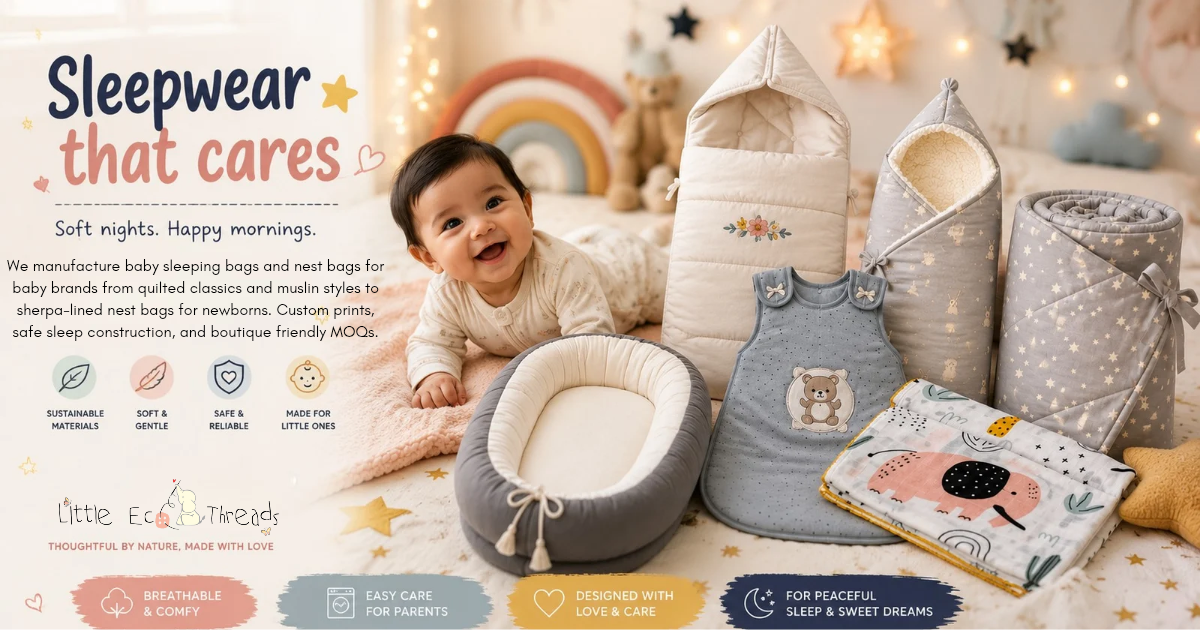
Baby sleepwear manufacturing is more technical than it looks from the outside. A sleep sack, footed sleepsuit, baby pajama set, or quilted sleeping bag may look simple on a product page, but every part of that garment has to perform through hours of rolling, kicking, stretching, washing, and repeated overnight use.
For brands building a baby essentials range, sleepwear is one of the categories where manufacturing quality matters most. Fabric has to feel soft against sensitive skin. Closures need to stay secure without irritating the child. Seams must survive repeated washing. Fit has to support movement without creating excess loose fabric.
This guide explains what goes into modern baby sleepwear manufacturing, from product development and fabric selection to TOG ratings, quality control, private label production, and choosing the right manufacturing partner.
Why Baby Sleepwear Requires More Than Good Design
A soft print or attractive product photo can help sell baby sleepwear, but it does not guarantee performance at 2 AM.
Baby sleepwear sits at the intersection of product design, fabric engineering, safety-led construction, manufacturing precision, and quality control. If any one of those areas is weak, the product may still look good on a hanger, but it will not hold up to real family use.
For example:
- Fabric needs to breathe and regulate warmth.
- Seams need to remain smooth and strong after repeated washing.
- Zippers and snaps need to function reliably without rough edges.
- Necklines, cuffs, and armholes must be proportioned carefully.
- Sleep sacks and wearable blankets need enough room for healthy movement.
This is why an experienced infant sleepwear manufacturer will usually have different development and quality systems than a general children's apparel factory. The expectations are higher, and the margin for error is smaller.
Building a Complete Baby Sleepwear Collection
No single sleepwear style works for every child, climate, or season. Strong baby sleepwear manufacturers usually help brands build complete ranges that cover newborns, infants, and toddlers across multiple temperature needs.
Common baby sleepwear categories include:
| Product Type | Best Use |
|---|---|
| Sleep sacks and wearable blankets | Safer blanket alternatives for overnight sleep |
| Baby sleeping bags and nest bags | Warm, enclosed sleepwear for cooler conditions |
| Footed sleepsuits and sleepers | Everyday infant sleepwear with full-body coverage |
| Baby pajama sets | Toddler sleepwear and older baby nightwear |
| Muslin sleep bags | Lightweight, breathable sleepwear for warmer climates |
| Quilted or sherpa-lined sleeping bags | Winter sleepwear and cold-weather collections |
Brands can also expand into newborn sleep gowns, organic cotton wraps, waffle weave pajamas, hooded nest bags, and seasonal layering pieces. The right range depends on the brand's market, climate, price point, and retail channel.
If you are planning a broader baby essentials collection, sleepwear often pairs well with swaddles, sleeping bags, PJ sets, and baby quilts.
From Concept to Finished Product
The best baby sleepwear manufacturing process starts before a pattern is ever cut.
Manufacturers usually begin by reviewing the brand's target customer, market position, seasonal needs, and intended product categories. From there, the development process moves through range planning, fabric selection, pattern development, sampling, fit correction, and production planning.
A typical development flow looks like this:
- Define the sleepwear category and use case.
- Select fabrics based on season, hand feel, breathability, and durability.
- Develop patterns for fit, movement, and age range.
- Produce samples and review construction details.
- Adjust measurements, trims, closures, and finishing.
- Approve final samples before bulk production.
- Move into cutting, stitching, finishing, inspection, and packing.
This structured process helps brands avoid common production issues such as inconsistent sizing, poorly placed zippers, weak seams, shrinkage problems, or fabrics that feel good initially but lose structure after washing.
Safe Sleep Starts With Thoughtful Construction
Baby sleepwear should be designed around comfort and safety from the beginning, not adjusted after the design is finished.
For sleep sacks and wearable blankets, the garment should sit securely around the shoulders while allowing healthy leg and hip movement. For footed sleepsuits, the body length, foot shape, and zipper placement need careful proportioning so the garment does not pull, twist, or bunch during sleep.
Details that matter include:
- Two-way zippers for easier changing
- Zipper guards to reduce irritation
- Smooth neckline finishing
- Secure snaps and trims
- Comfortable cuffs that hold shape
- Clean internal seams
- Correct ease around the body and legs
These details are not decorative. They decide whether a garment feels comfortable through the night and whether parents trust the brand enough to reorder.
Understanding TOG Ratings and Seasonal Sleepwear
TOG ratings help parents understand how warm a baby sleepwear product is. For brands, TOG planning is useful because it helps structure seasonal collections around clear warmth levels rather than vague labels like "lightweight" or "winter weight".
As a general product-development principle:
- Lightweight muslin sleep bags suit warmer climates and summer ranges.
- Organic cotton sleepwear works well for everyday use.
- Waffle weave sleepwear adds texture and airflow.
- Quilted sleeping bags provide more insulation.
- Sherpa-lined or hooded nest bags support colder-season collections.
Brands selling across different climates, such as Australia, Europe, and the United States, should plan sleepwear by season and room-temperature use case. This makes the range easier for retailers to explain and easier for parents to shop.
Choosing Fabrics for Baby Sleepwear
Fabric choice is one of the most important decisions in baby sleepwear manufacturing. The fabric has to balance softness, breathability, durability, shrinkage control, and wash performance.
Common options include:
- Organic cotton: Soft, durable, and suitable for everyday sleepwear.
- Cotton muslin: Breathable and lightweight, ideal for muslin sleep bags and warm-weather styles.
- Waffle weave cotton: Textured, breathable, and useful for layering pieces.
- Quilted cotton: Warmer and more structured for sleeping bags and cold-weather designs.
- Sherpa lining: Soft and insulating for winter nest bags and premium seasonal products.
For baby products, brands should also ask about fabric testing, colourfastness, shrinkage, and relevant certifications. If sustainability is part of the brand positioning, start with certified or responsibly sourced fabrics and ask your manufacturer for documentation early in development.
For a deeper fabric comparison, read our guide to sustainable fabric options for baby apparel.
Precision Manufacturing Behind Every Collection
Once samples are approved, production quality depends on repeatable manufacturing systems.
Baby sleepwear production typically includes incoming fabric inspection, marker planning, precision cutting, stitching, zipper or snap application, quilting where required, finishing, pressing, and final inspection. Each stage affects the final product.
For example, inconsistent cutting can cause sizing variation. Poor zipper installation can create irritation or functional issues. Uneven quilting can change warmth and appearance across units. Weak seam construction can lead to returns after only a few washes.
That is why quality-focused manufacturers monitor production throughout the process rather than waiting until the end.
Quality Control Before Products Reach Families
Quality control is especially important for baby sleepwear because parents are buying trust as much as they are buying a garment.
Before shipment, manufacturers should check:
- Stitch strength and seam security
- Zipper and snap function
- Measurement accuracy against the approved size spec
- Shrinkage and wash performance
- Colourfastness
- Fabric defects and shade consistency
- Loose threads, rough trims, and visual finishing
- Packing and labeling accuracy
These checks protect the brand from avoidable returns, negative reviews, and wholesale buyer concerns. They also help ensure that the approved sample and the bulk production run remain consistent.
You can read more about this in our guide to garment quality control.
Private Label Baby Sleepwear Manufacturing
Private label baby sleepwear manufacturing allows brands and retailers to launch sleepwear under their own name while working with a specialist production partner.
A private label manufacturer can support:
- Product development
- Fabric sourcing
- Sampling
- Custom labels and trims
- Sleep sacks, pajamas, sleepsuits, and sleeping bags
- Seasonal range planning
- Bulk production
- Quality control and packing
For growing brands, this model is useful because it provides a scalable path from a focused first range to a broader product collection. A brand might start with muslin sleep bags and footed sleepers, then expand into quilted sleeping bags, toddler pajamas, and seasonal sleepwear once demand is proven.
Sustainability in Baby Sleepwear Manufacturing
Sustainability in sleepwear is not only about choosing one organic fabric. It is also about reducing waste, improving durability, sourcing responsibly, and creating garments that can survive repeated use.
Important sustainability decisions include:
- Choosing certified or responsibly sourced materials
- Planning efficient cutting to reduce fabric waste
- Designing garments that hold shape after washing
- Avoiding unnecessary trims and packaging
- Producing realistic quantities instead of overstock
- Working with a manufacturer that understands traceability
For brands selling to conscious parents and retailers, these details are increasingly part of the buying decision. Strong sustainability claims need to be supported by the manufacturing process, not added after the fact.
Choosing the Right Baby Sleepwear Manufacturing Partner
The right baby sleepwear manufacturer should understand the complete category, not just basic garment stitching.
Look for a partner with experience across sleep sacks, baby sleeping bags, footed sleepers, pajamas, muslin sleep bags, quilted styles, and seasonal sleepwear. Ask how they handle sampling, fabric testing, quality control, minimum order quantities, and scaling production as the range grows.
Useful questions to ask include:
- Which baby sleepwear categories do you manufacture regularly?
- Can you support private label labels, trims, and packaging?
- What fabric certifications or test reports can you provide?
- How do you check shrinkage, colourfastness, and seam strength?
- What are your minimum order quantities by style or category?
- Can you support both small test launches and larger repeat orders?
A good manufacturing partner should help you build the collection carefully, not simply quote a price and move straight to production.
How Little Eco Threads Supports Baby Sleepwear Brands
Little Eco Threads helps baby and kidswear brands develop complete sleepwear collections across sleeping bags, nest bags, sleep sacks, footed sleepers, pajamas, muslin sleepwear, and seasonal styles.
We support brands through product development, sampling, fabric sourcing, production, quality control, and scalable manufacturing. Whether you are launching a focused first collection or expanding an existing private label range, we can help turn your sleepwear idea into a production-ready product.
Explore our sleeping bags catalog, browse PJ sets, or contact us to discuss your baby sleepwear range.