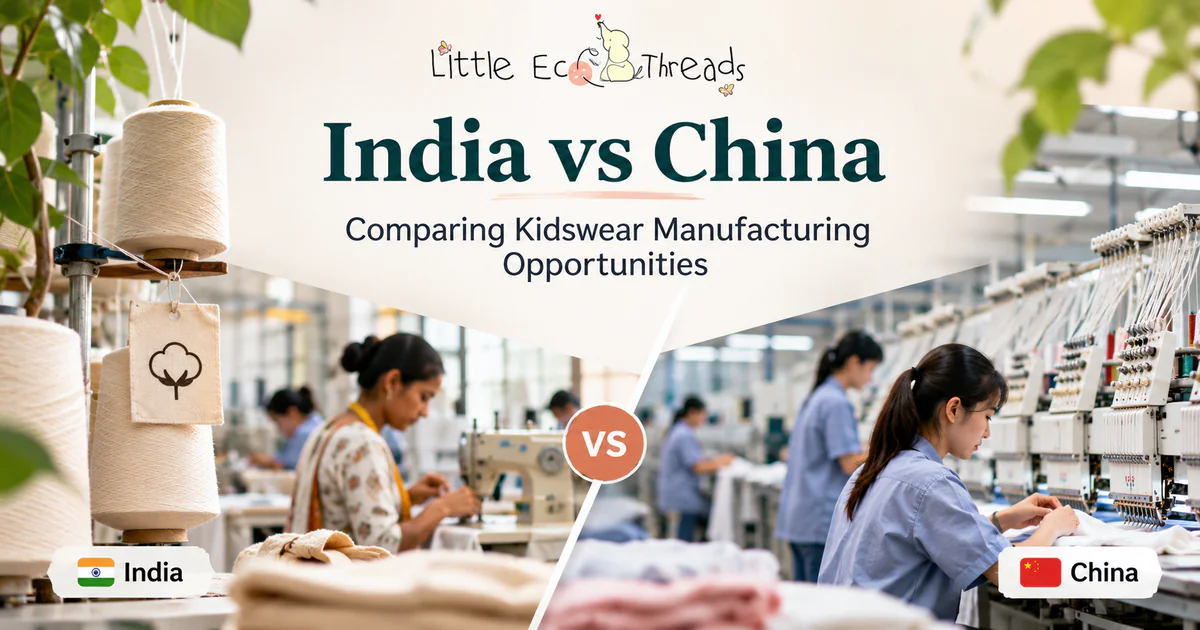
India vs China: Comparing Kidswear Manufacturing Opportunities
Choosing a kidswear manufacturer in late 2026 is no longer a question of the lowest unit price. Tariff swings, new EU compliance rules and a push to diversify have made India and China the two most discussed options for brands that need a dependable kids clothing manufacturer.
China remains the largest apparel exporter, with about 29% of global apparel exports in 2025 against roughly 3% for India, according to ICRA estimates based on UN Comtrade data. Scale is only one test. Buyers also weigh customisation, minimum order quantity (MOQ), organic cotton access and how well a supplier can document its supply chain.
This article compares both countries for children's clothing manufacturing, shows where each has the edge, and explains why a kidswear manufacturer in India deserves a place on more sourcing shortlists. Capabilities and MOQs vary from factory to factory in both countries, so treat the comparison as a starting point for supplier due diligence, not a verdict.
What Is Reshaping Kidswear Sourcing in 2026
US tariffs: in force, but still moving
On 24 July 2026 the US applied new Section 301 tariffs to 60 economies over forced-labour import rules: 10% for India and 12.5% for China. China also carries older Section 301 duties that USTR put at 7.5% to 100% depending on the product, so its total exposure is higher. Some commentators expect further US apparel tariff changes after the midterms. That is a forecast, not policy.
India-EU trade deal: concluded, not yet in force
India and the EU concluded free trade negotiations on 27 January 2026. India's Commerce Secretary said on 18 November that signing is targeted for December 2026 and entry into force for the first quarter of 2027. Textiles and apparel, which currently face 12-16% EU import duty, are expected to gain duty-free access. Until the agreement takes effect, current duties apply.
EU rules: transparency becomes a market-access issue
- Forced Labour Regulation: applies from 14 December 2027 and covers every product, so suppliers need traceable supply chains.
- Unsold-stock destruction ban: since 19 July 2026, large companies may not destroy unsold apparel except in listed cases, which favours smaller, better-judged production runs.
- Digital Product Passport: no textile requirement exists yet. The Commission lists the delegated act for late 2027, with at least 18 months before it applies. That timeline may change.
What this means for kidswear brands
The sourcing question is shifting from "who is cheapest?" to "who is competitive after duties, can prove traceability and delivers on time?" Many brands are therefore adding a second country rather than replacing China outright. For additional insights into the evolution of the fashion industry, changing styles and global fashion developments, readers can also explore Forever in Fashion.
India vs China: Kidswear Manufacturing Compared
Neither country wins every category. The table below summarises typical patterns, but individual factories differ widely, so confirm capabilities, MOQs and certificate scope with each supplier in writing.
| Factor | India | China | Edge |
|---|---|---|---|
| Manufacturing infrastructure | Integrated cotton-to-garment base | Deepest all-fibre base, plus trims, machinery, automation | China |
| Production capabilities | Cotton knits and wovens, embroidery, smocking | Broad range, including synthetics and outerwear | Depends |
| Customisation flexibility | Often open to small custom runs and handcrafted detail | Fast development, strongest at larger volumes | Depends |
| MOQ requirements | Many factories accept lower MOQs | Often higher, though low-MOQ suppliers exist | India (typically) |
| Organic and sustainable fabric | Long-standing organic cotton producer | Options exist; cotton origin needs closer checking | India |
| Labour and production economics | Generally lower labour costs | Higher labour costs, offset by productivity | Depends |
| Quality control | Varies by factory; audits advisable | Mature QC systems at many factories | China (typically) |
| Certifications and compliance | GOTS, GRS, Sedex, OEKO-TEX available | Same standards widely held | Depends |
| Supply chain and lead times | Improving; factory-dependent | Typically faster, with shorter local loops | China |
| Suitability for startups | Often suits small first collections | Workable via agents or specialist factories | India (typically) |
| Suitability for established brands | Strong second source; EU duty upside | Strong for scale and speed | Depends |
Where the choice depends on the buyer
China's advantage is clearest for large, repeat programmes with tight timelines. India's is clearest for cotton-based, design-led ranges, smaller runs and brands that want an organic or certified story. Duties change the picture too, so compare landed cost, not only the factory price.
Why India Is Becoming an Important Kidswear Manufacturing Destination
A cotton-to-garment ecosystem
India's Ministry of Textiles reports that textile exports, including handicrafts, reached Rs 3.16 lakh crore in FY2025-26, up 2.1%, with ready-made garments the largest segment. Growth is modest, and India's global apparel share remains small. But the base is broad: cotton, yarn, fabric, embroidery and stitching are available within one country, which helps brands that want shorter, more controllable supply chains.
Organic cotton and sustainable kidswear
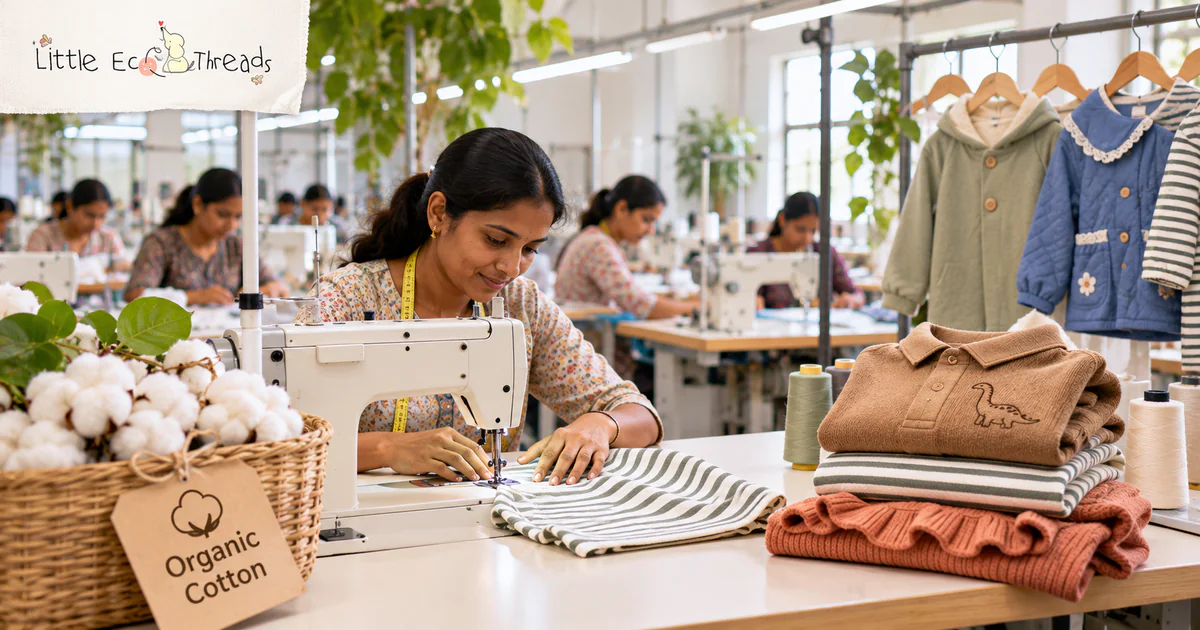
India has ranked as the world's largest organic cotton producer in Textile Exchange reporting, though its share has fallen from past highs and the 2022 report flagged low data confidence for India. That makes certification and traceability essential. For babywear and children's clothing, where skin contact and chemical safety matter most, buyers should ask for transaction certificates, not just general claims about organic cotton.
Customisation, private label and flexible runs
Indian factories often combine hand embroidery, smocking, printing and small-batch production, which suits private-label kidswear and design-led collections. Flexibility is a factory-level trait, not a national guarantee, so test it through samples and a pilot order.
Export momentum and diversification
Indian exporters are already looking beyond the US: between April and August 2026, shipments to the US fell 9.8% while exports to other markets rose 3.7%. With the EU agreement pending, brands that diversify into India are positioning for a market where duty-free access is expected, not yet confirmed.
Little Eco Threads: An Indian B2B Partner for Sustainable Kidswear
Little Eco Threads is a business-to-business children's clothing manufacturer based in Noida, India. It works with brands, wholesalers and importers rather than selling to consumers, and its website says it serves clients in Europe, North America and Australia.
Customisation and product development
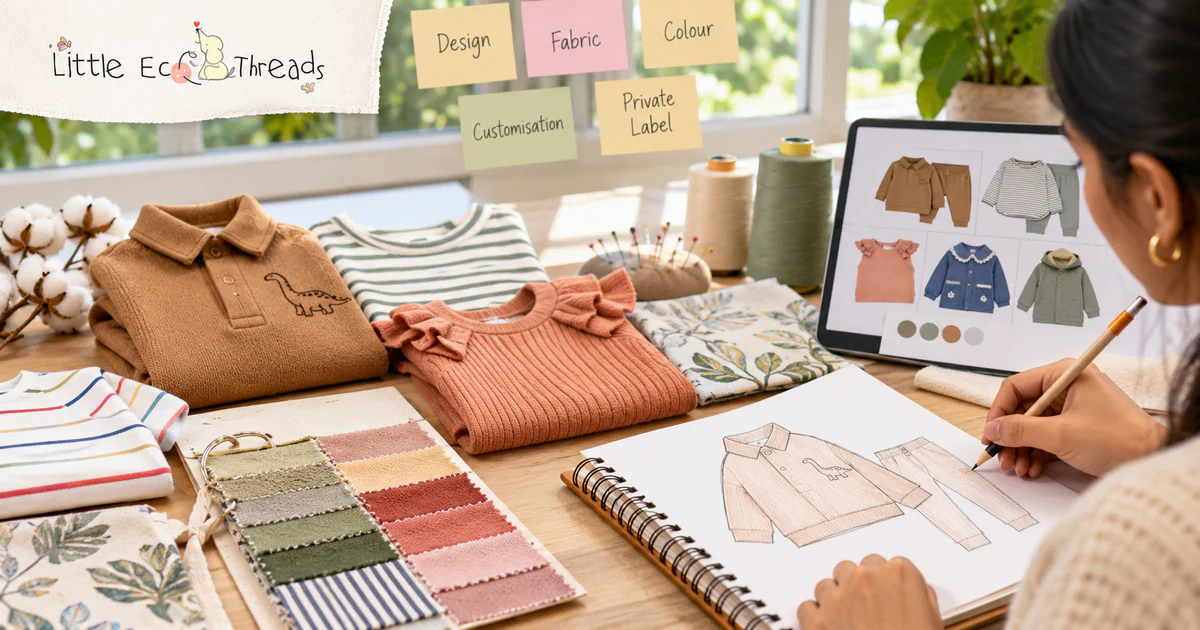
Customisation is the core of its offer. Brands can work with the team on:
- Custom designs and product development from a brief or tech pack
- Fabric selection, including organic cotton, linen and other options
- Colour and print customisation
- Size and fit requirements
- Customised collections and private-label development
Not every option suits every style or order size, so feasibility, fabric availability and costs are agreed during sampling.
Organic and sustainable production
The factory is GOTS, GRS and Sedex approved. GOTS covers organic fibre processing, GRS covers recycled content, and Sedex with SMETA audits covers labour, safety and ethics. Certification applies to the audited facility and to orders produced under the relevant scope, so brands should confirm that a specific product, fabric and claim is covered and request documentation.
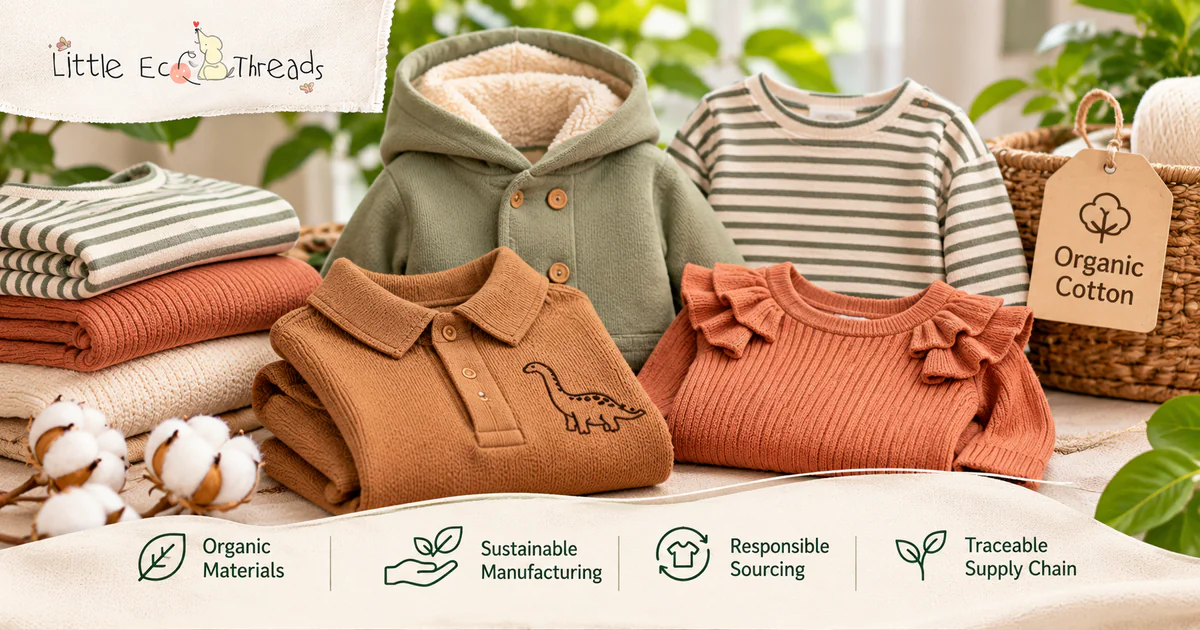
Low MOQ manufacturing from 100 pieces
Minimum orders start from 100 pieces. That lets new startups and small brands launch a first capsule, and lets established brands trial a new design or product category, without committing to a large run. Smaller initial orders limit inventory risk and give real sales data before a bigger reorder.
Product range
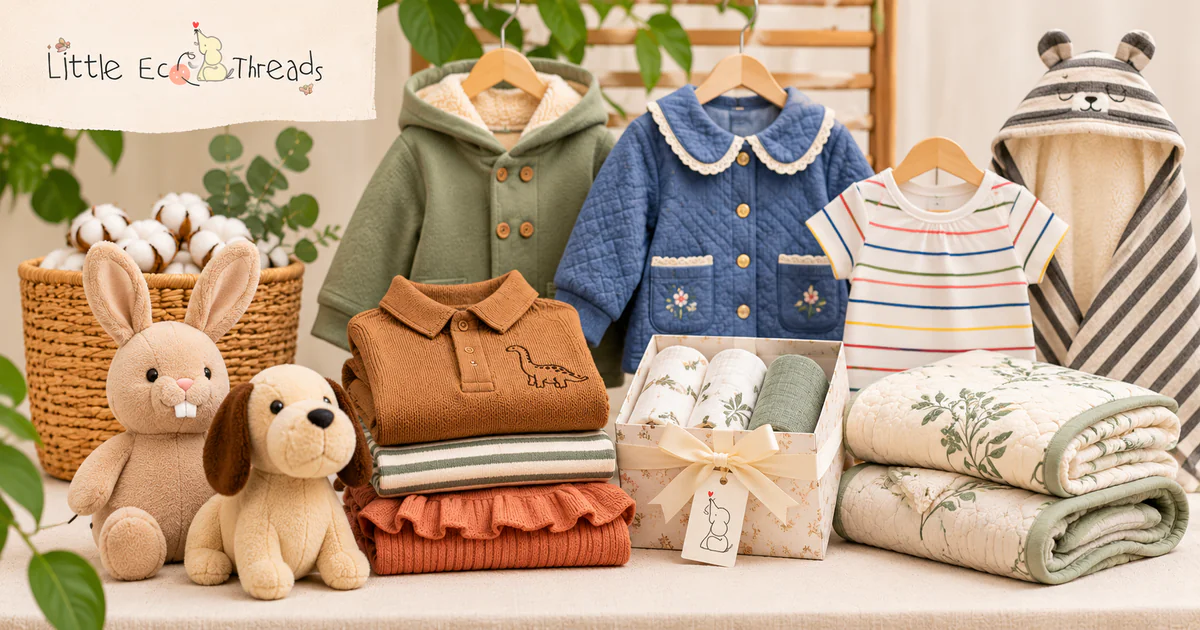
- Babywear and newborn: newborn essentials, baby gift sets, organic cotton clothing, sleepwear
- Kidswear: everyday wear, summer styles, partywear, swimwear
- Nursery textiles: swaddles, baby sleeping bags, quilts
- Soft goods: soft toys, plush toys and other customised children's textile products
Manufacturing services
Little Eco Threads offers OEM and ODM manufacturing, private-label production, custom product development, wholesale manufacturing, sustainable kidswear production and newborn essentials manufacturing. For international brands, this means one Indian partner can take a collection from concept to production.
Who Should Choose India and Who Should Choose China?
There is no universal answer. These pointers describe tendencies, and each should be tested against real quotes and samples.
- Startups launching a first collection: India is often the more practical starting point because low MOQs, such as 100 pieces at some factories, keep cash and inventory risk down. China can work through specialist low-MOQ suppliers or agents.
- Established international brands: China suits large, repeat programmes and tight calendars. India works well as a second source that reduces dependence on one country.
- Extensive customisation: India suits embroidery-led, small-batch and private-label ranges. China suits complex development at scale.
- Sustainable materials: India is a strong option for organic cotton kidswear, provided GOTS or equivalent documents cover the order. Wherever you source, trace cotton origin.
- Large-scale production: China's depth in materials and capacity remains difficult to match, particularly for synthetics.
- Supply chain diversification: India offers an alternative base, with EU duty benefits expected after the trade agreement takes effect.
The final decision should rest on product requirements, factory capabilities, quality standards, pricing, MOQ and sourcing goals. Many brands run both countries side by side.
Conclusion: Choosing a Kidswear Manufacturer on Evidence
Both India and China offer real manufacturing opportunities. China leads on scale, speed and supply chain depth. India deserves consideration from brands seeking customisation, organic kidswear, private-label production, low-MOQ options and a more diversified sourcing base, especially as the EU trade agreement moves toward signing and EU transparency rules tighten.
For brands exploring a kidswear manufacturer in India, Little Eco Threads offers sustainable kidswear, babywear and customised product development for international buyers. Brands comparing options can review its manufacturing capabilities and request samples or a quotation to test fit before committing to an order.