Quality Starts Before the First Stitch
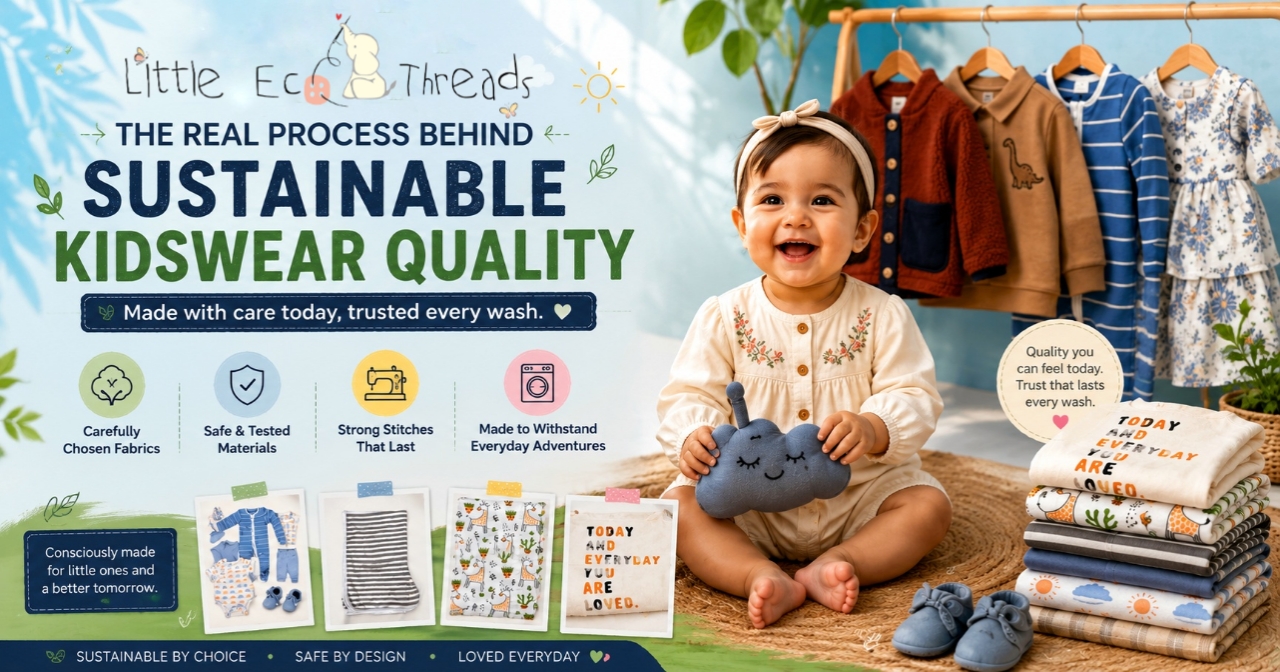
Choosing a Kids Clothing Manufacturer in India is not only about finding a factory that can sew neatly. For baby and children's apparel, quality starts long before the first stitch: with fabric selection, certified material sourcing, pattern accuracy, trim safety, wash testing, and continuous quality control.
Every parent has seen the opposite. A beautiful romper looks perfect online, but after a few washes the fabric twists, the stitching loosens, the color fades, or the fit changes. Most parents do not complain. They simply do not buy from that brand again.
This article explains how a responsible children's clothing manufacturer builds quality into every step of production, especially for brands that care about sustainable kidswear, organic cotton, ethical garment manufacturing, and long-term customer trust.
Why A Kids Clothing Manufacturer in India Must Build Quality Early
Children do not wear clothes gently. They crawl, climb, jump, nap, spill, pull at seams, and go through more wash cycles than most adult garments.
That is why quality in kidswear is not a final inspection task. It is a system. By the time a garment reaches the sewing line, many of the most important decisions have already been made:
- Which fabric was selected
- Whether the fabric was inspected before cutting
- Whether shrinkage was tested
- Whether the pattern was graded correctly
- Whether trims were safe and secure
- Whether the construction method matches the garment use
- Whether the production timeline allows proper checks
At Little Eco Threads, this is the standard we follow as a sustainable and ethical kidswear partner. The goal is not just to make garments look good on delivery day. The goal is to help brands create children's clothing that parents trust after repeated wear and washing.
Choosing Fabrics That Are Safe For Children
Fabric is where every strong kidswear product begins. It is also where many quality problems either get prevented or built into the garment.
For baby and toddler clothing, fabric should feel soft on delicate skin, allow airflow, hold shape, and remain strong after frequent washing. Many brands choose Organic Cotton because it supports a clear comfort and sustainability story for children.
Other fabrics such as muslin, cotton voile, linen blends, and selected bamboo blends may also suit baby and kidswear depending on the garment type. The best choice depends on use: sleepwear, rompers, swaddles, party wear, summer sets, and everyday basics all behave differently.
A good Kidswear Manufacturer should help a brand understand fabric tradeoffs before sampling starts.
Sustainable Kidswear Manufacturer Standards
A sustainable kidswear manufacturer should treat fabric sourcing, waste control, dyeing, washing, and documentation as part of the quality system.
Sustainability and quality often support each other. Suppliers that invest in traceability and certification usually have tighter control over their materials. Cutting rooms that reduce fabric waste also tend to plan production more carefully. Realistic timelines allow proper testing instead of rushing garments through the line.
This is where Ethical Garment Manufacturing becomes practical, not abstract. Responsible production choices affect how the garment feels, how long it lasts, and how confidently a brand can explain its supply chain.
Organic Cotton Kidswear And Certification
For organic kids clothing manufacturing, certification planning matters early. Brands should not wait until the garment is finished to ask whether organic or sustainability claims can be supported.
GOTS is a globally recognized standard for organic textiles, and it includes environmental and social criteria across textile processing. A GOTS certified clothing manufacturer or certified supply chain partner can help brands support organic textile claims when the product scope and documentation are correct.
OEKO-TEX standards are widely used for textile testing and product safety communication. For brands seeking OEKO-TEX certified kidswear, it is important to confirm which certificate applies, whether it is current, and whether the scope covers the fabric, facility, or finished product being discussed.
Cotton sourcing can also be supported by broader responsible cotton programs. Better Cotton is one source brands may review when considering Trusted Cotton approaches across supply chains.
The practical rule is simple: ask for current documents before bulk production, and make sure the certificate supports the claim your brand wants to make.
Inspecting Fabric Before Cutting
Even fabric from a trusted supplier needs to be inspected when it arrives at the factory.
Fabric inspection typically checks:
| Inspection Area | What It Catches |
|---|---|
| Shade variation | Different rolls or panels that do not match |
| Weaving defects | Slubs, holes, uneven density, or visible flaws |
| Fabric weight | GSM changes that affect drape, feel, and durability |
| Shrinkage | Size changes that need to be allowed for before cutting |
| Hand feel | Roughness, stiffness, or finishing issues |
Catching issues at this stage is much cheaper than discovering them after cutting, sewing, and packing. A shade difference that looks minor on a swatch can become obvious when fifty rompers are laid side by side.
This is one of the quietest parts of the Kidswear Manufacturing Process, but it is also one of the most cost-effective.
Pattern Accuracy And Fit Consistency
Sizing inconsistency is one of the most common complaints in children's clothing. It usually starts with pattern grading, not sewing.
Children's proportions change quickly across ages. A pattern that fits an eighteen-month-old cannot simply be enlarged for a three-year-old. Torso length, head opening, sleeve length, rise, and movement allowance all need careful review.
Fit consistency protects the brand as much as the customer. Every return costs money, but repeated sizing complaints also damage confidence. Parents who find a reliable fit are more likely to reorder.
A children's clothing manufacturer should test the pattern before bulk production and keep approved measurements documented across batches.
Stitching Quality That Lasts
Children put seams under heavy stress. Underarms, crotch seams, knees, waistbands, snaps, and shoulder openings all face repeated pulling and movement.
Strong stitching depends on:
- Seam type matched to the fabric
- Thread tension that holds without cutting into the cloth
- Stitch density suitable for stretch and movement
- Reinforcement at high-stress points
- Wash testing before full production where needed
A seam can look clean fresh off the machine and still fail after repeated washing if the stitch type or tension is wrong. Quality control should test how the garment behaves in use, not only how it looks on a hanger.
Trims, Buttons, Snaps, And Labels
Trims are small details, but in kidswear they can become major safety and comfort issues.
Buttons, snaps, zippers, elastic, cords, bows, and labels should be reviewed for:
- Secure attachment
- Pull strength
- Sharp or rough edges
- Small-parts risk
- Wash durability
- Comfort against the skin
- Placement that does not irritate the child
A snap that comes loose is not just a defect. It can become a safety concern. A scratchy label can make a child refuse to wear an otherwise well-made garment. A careful kidswear factory treats trims with the same seriousness as fabric.
Color Performance And Wash Durability
Parents expect kids' clothes to survive frequent washing. Color and shape are often the first signs of whether a garment was made well.
Color fastness checks whether dye bleeds, fades, or transfers during washing. Shrinkage testing shows whether the garment will keep its intended size. Shape retention checks whether seams twist or panels distort after laundering.
For eco-friendly kids clothing manufacturing, controlled dyeing and finishing are especially important. A garment can be marketed as sustainable, but if it looks worn out after a few washes, parents will not see it as a responsible purchase.
Durability is part of sustainability because longer-lasting garments reduce waste and protect brand trust.
Kidswear Quality Control Before Packing
Final inspection should confirm that each earlier stage was done properly. It should not be the first serious quality check.
Before packing, a manufacturer should review:
- Measurements against the approved spec
- Stitching and seam integrity
- Color consistency
- Print and embroidery placement
- Loose threads or stains
- Label accuracy
- Trim attachment
- Pressing, folding, and packing
- Carton condition and shipment readiness
For private label brands, packaging matters too. A damaged polybag, incorrect label, or poorly folded garment can weaken the first impression before the parent even touches the product.
Why Quality And Sustainability Work Together
Quality and sustainability are sometimes discussed as separate goals. In kidswear manufacturing, they are closely connected.
Better sourcing creates more consistent fabric. Better pattern planning reduces waste. Better testing prevents returns. Better trims reduce product failures. Better communication prevents rushed corrections.
That is why brands looking for a sustainable kidswear manufacturer should ask about quality systems, not only fabric options. A factory that understands sustainability but cannot manage measurements, stitching, trims, and final QC will still create risk.
Frequently Asked Questions
What should I look for in a kids clothing manufacturer in India?
Look for kidswear experience, fabric knowledge, sampling discipline, clear communication, quality-control checkpoints, certification support, export experience, and the ability to support your order size.
Is organic cotton better for kidswear?
Organic cotton is popular for baby and children's clothing because it supports a soft, natural fabric story. Brands should confirm certification and documentation before making organic claims.
What certifications matter for sustainable kidswear?
GOTS and OEKO-TEX are two common certification paths brands ask about. The right certification depends on the product, fabric, supply chain, and claim.
Why does kidswear need stricter quality control?
Children's clothing is washed more often, worn more actively, and used closer to sensitive skin. Small problems with seams, trims, labels, or fabric feel can quickly affect customer trust.
Can a manufacturer support private label kidswear?
Yes. A private label kidswear manufacturer can usually support labels, tags, packaging, custom prints, embroidery, trims, and brand-specific finishing details.
Build Quality Before You Build Inventory
A reliable children's clothing manufacturer does not treat quality as a final checklist. Quality begins with material sourcing, certification planning, pattern accuracy, trim review, stitching, wash testing, and careful inspection before shipping.
For brands choosing a sustainable kidswear manufacturer, the best partner is one who understands both product quality and responsible production. That is what helps garments last longer, feel better, and earn parent trust over time.
If you are looking for an organic cotton kidswear manufacturer, eco-friendly kids clothing manufacturer, ethical clothing manufacturer India partner, or private label kidswear manufacturer, contact Little Eco Threads. We can help you plan your next collection with quality built in from the start.