Sourcing Cotton Baby Toys from India: Wholesale, Private Label and Custom Manufacturing
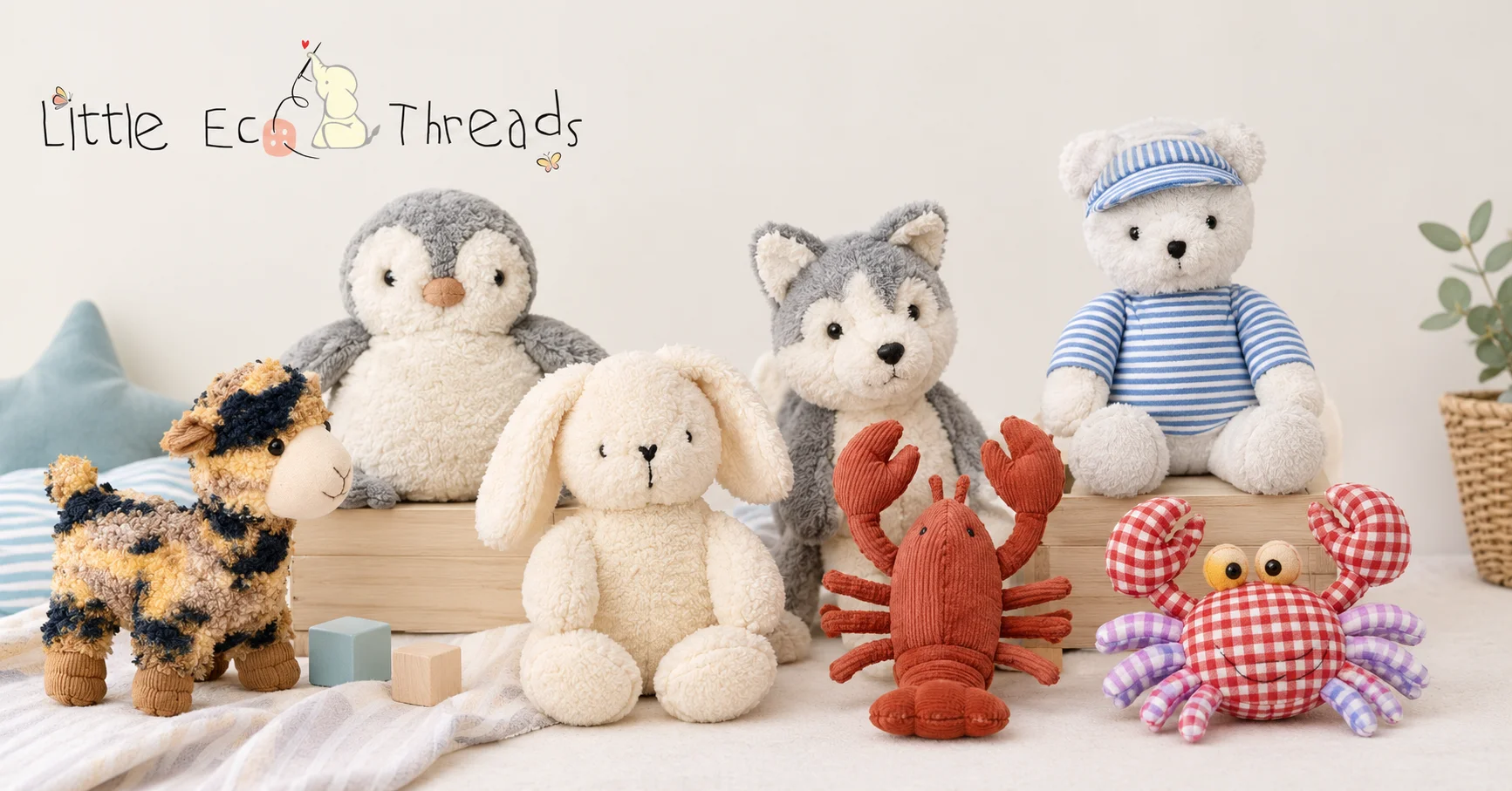
Sustainable cotton baby toys have moved from a niche category to a regular fixture in the range plans of baby brands, specialist retailers and gift distributors. Buyers in the UK, USA, Europe, Australia and South Africa are asking tougher questions about fibre content, supply chain transparency and compliance, and many are turning to India for answers.
India pairs an established cotton and textile base with export-oriented factories that can handle both small trial runs and larger replenishment orders. For procurement managers, the practical question is no longer whether India can make soft toys. It is how to structure wholesale, private label and custom programmes so that quality and compliance hold up from the first sample to the fifth reorder.
This guide explains how cotton baby toys are made, how wholesale and private label models work, which safety frameworks apply, and how to evaluate a cotton baby toy manufacturer in India. It is written for sourcing teams, importers and brand founders rather than end consumers.
Why Cotton Baby Toys Are Gaining Attention in the Global Market
Retailers and brands serving the baby category are under steady pressure to justify the materials they stock. Cotton is familiar to buyers and easy to explain on a product label, which makes cotton baby toys a natural extension for brands already selling babywear, muslins or nursery textiles. The same fabrics, colour palettes and packaging can carry across categories, which simplifies range planning.
Material choice shapes both positioning and cost. Conventional cotton is widely available and suits many price points. Organic cotton adds a documented claim, but only when it is verified. The Global Organic Textile Standard (GOTS) names textile toys among the final products it can cover and applies to textiles made from at least 70% certified organic natural fibres (GOTS Version 8.0). Buyers should check which product categories a supplier's scope certificate actually lists, because certification attaches to named products and processes rather than to a factory's entire output.
For emerging sustainable brands, the opportunity is differentiation: considered materials, honest claims and a clear account of where products are made. Vague green language is a commercial risk as much as a reputational one, so every claim should trace back to a document.
Why Source Cotton Baby Toys from India?
India's appeal rests on infrastructure that already exists. The government's investment promotion agency describes a textile sector able to cover the whole value chain and export to more than 100 countries (Invest India). For a soft toy programme, that means fabric sourcing, dyeing, printing, embroidery, cutting and stitching can often be coordinated within one region rather than across several countries.
Several practical advantages follow. Established cotton processing supports a wide choice of fabrics, from jersey and muslin to terry and canvas. A skilled sewing workforce can handle detailed construction such as embroidered faces, appliqué and multi-piece patterns. Factories with export experience are used to buyer specifications, third-party inspection and the paperwork importers need. Product development is also flexible, because new shapes, prints and trims can usually be sampled without rebuilding the supply chain.
None of this removes the need for diligence. Capability varies between factories, and cost and lead times depend on specification, order size and season. Sourcing teams should evaluate suppliers individually rather than relying on country-level generalisations.
Understanding the Manufacturing Process of Cotton Baby Toys
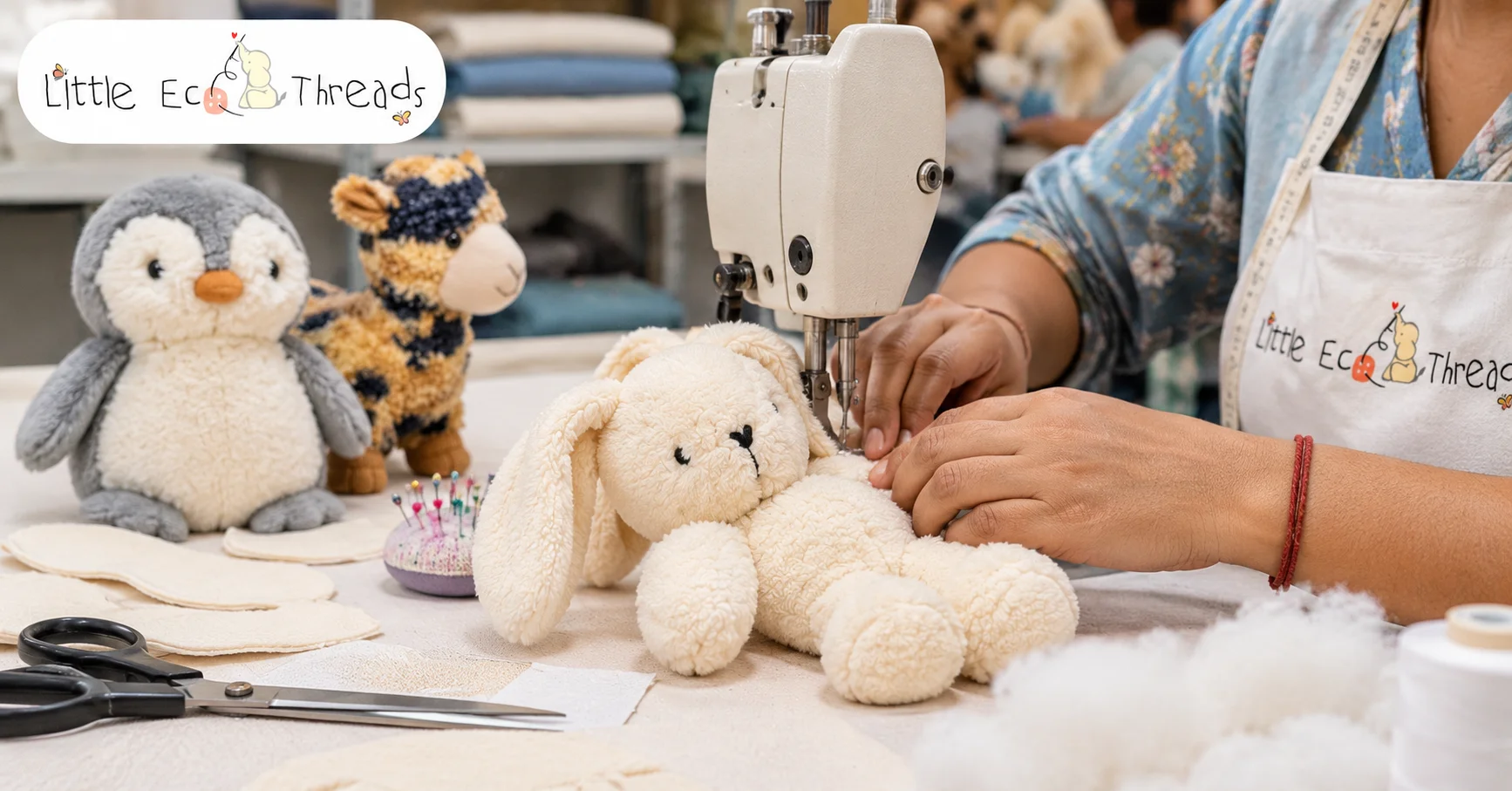
Fabric selection and sourcing set the foundation. Weight, weave or knit, hand feel and colourfastness all affect how a toy looks and washes, and suppliers should be able to document where fabric originates, which matters for traceability and for any organic claim.
Pattern development and cutting turn the design into pieces with defined seam tolerances. Simple shapes keep unit costs predictable, while multi-panel designs need more cutting time and careful print matching.
Stitching and assembly decide durability. Seam allowance, stitch density and reinforcement at stress points determine whether a toy withstands pulling and repeated washing. For very young children, embroidered details are generally preferable to small attached parts, since detachable components are a recognised hazard in toy safety standards.
Filling and finishing come next. Fillings range from polyester fibre to cotton and other natural fibres, and the choice affects softness, washability and sustainability claims. Filling should be clean, evenly distributed and fully enclosed behind a secure closing seam.
Inspection and packaging confirm measurements, seam strength, labelling and visual consistency before goods are packed to the destination market's labelling requirements.
Age-appropriate design runs through every stage. A toy for newborns calls for different construction choices from one for toddlers, so the target age group belongs in the brief, not in a decision made after sampling.
Wholesale Cotton Baby Toys: Opportunities for International Buyers
Wholesale programmes suit retailers, distributors and importers that want a dependable range at repeatable specifications. Rather than buying single designs, many buyers build a collection of related items, such as comforters, rattles, stuffed animals and sensory toys, that share fabrics and can be reordered in different colourways.
Pricing is driven by a handful of variables: fabric type and consumption, stitching complexity, embroidery or print detail, filling weight, packaging and order quantity. Quotes are only comparable when every supplier prices against the same written specification and the same packaging assumptions, so it is worth asking exactly what is included, from testing and labelling to carton marking.
Planning matters as much as price. Share forecasts early, agree sampling and approval stages, and build buffer time around peak retail seasons, because sampling, bulk production and shipping all take time. Supplier evaluation should cover capacity, inspection routines and how problems are reported. Where low minimum order quantities are available, smaller importers and growing brands can test a range before committing to volume.
Private Label and Custom Cotton Baby Toy Manufacturing
Private label lets a brand sell toys made by a manufacturer under its own name, labels and packaging. It is the fastest route for startups and established brands that want a collection without owning production. Emerging brands often begin with a small capsule range, while established brands use it to add a differentiated line.
OEM and ODM Models
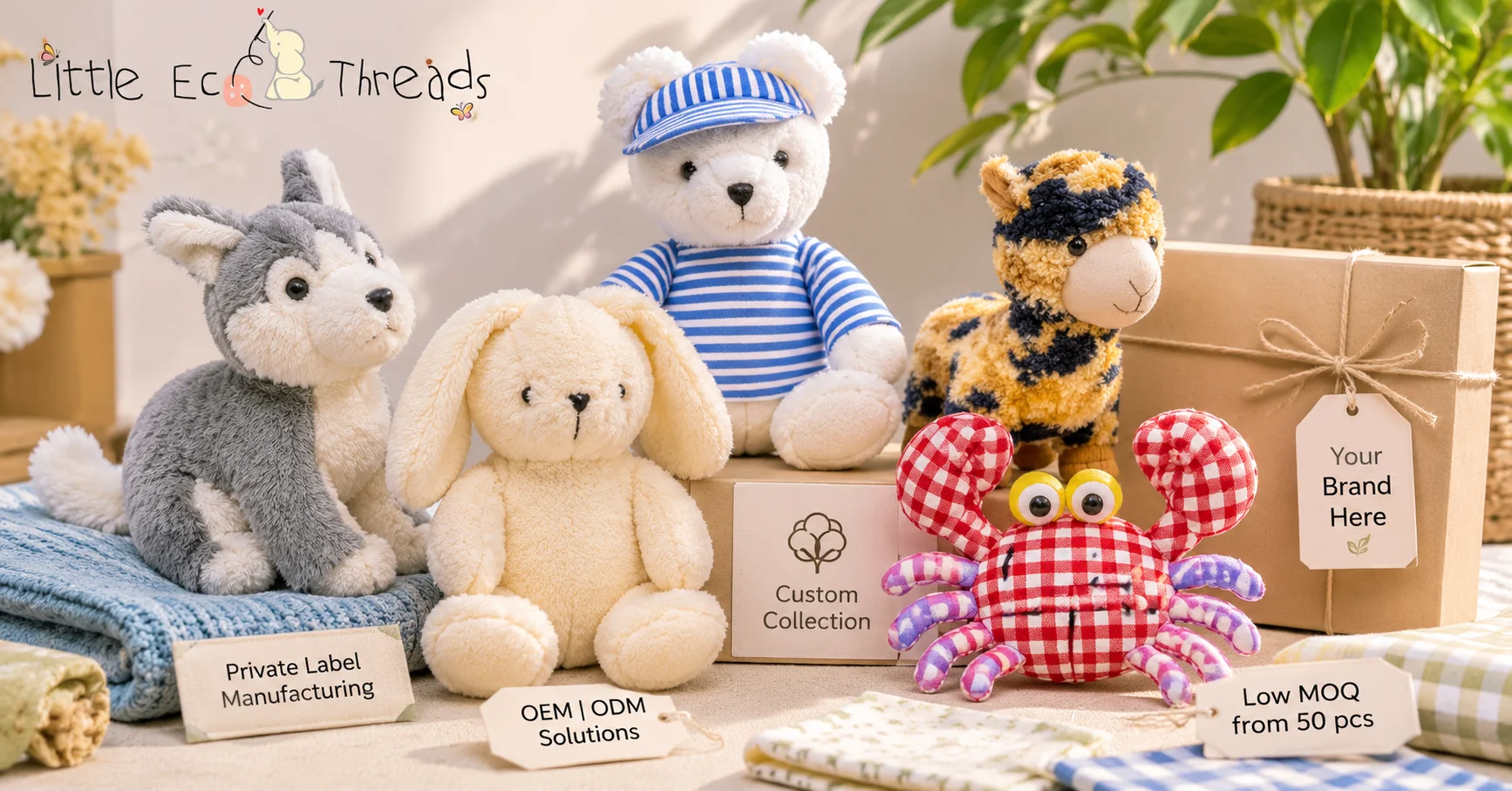
Under OEM, the buyer supplies the design, technical drawings and specifications, and the factory produces to them. Under ODM, the manufacturer offers designs and development support that the brand adapts, which shortens the path from concept to sample. Many programmes blend the two: a catalogue shape adjusted with custom fabrics or colours.
Customisation and Branding
Custom shapes, fabrics, embroidery, colourways, woven labels, hangtags and packaging can all be specified. Each addition affects cost, sampling time and testing scope, so the brief should be settled before sampling begins.
Little Eco Threads is a B2B sustainable textile and children's product manufacturer offering OEM and ODM solutions and private label opportunities. Its capabilities include sustainable children's products, newborn essentials, soft toys and nursery textiles, with minimum order quantities starting from 50 pieces and a stated production capacity of approximately 150,000 pieces per month. The company has international business exposure across the UK, Europe, USA, Australia and South Africa, and holds GOTS, GRS and SEDEX credentials at company level. Material and compliance details for any individual toy are confirmed project by project.
Quality Standards and Safety Considerations
Toy safety starts with traceability. Buyers should be able to see where fabric, thread, filling and trims come from, and keep batch records that link finished goods to materials. Textile checks such as colourfastness sit alongside construction checks on seam strength, closure security and the absence of small detachable parts. Filling material deserves particular attention, since it affects both safety testing and any sustainability claim.
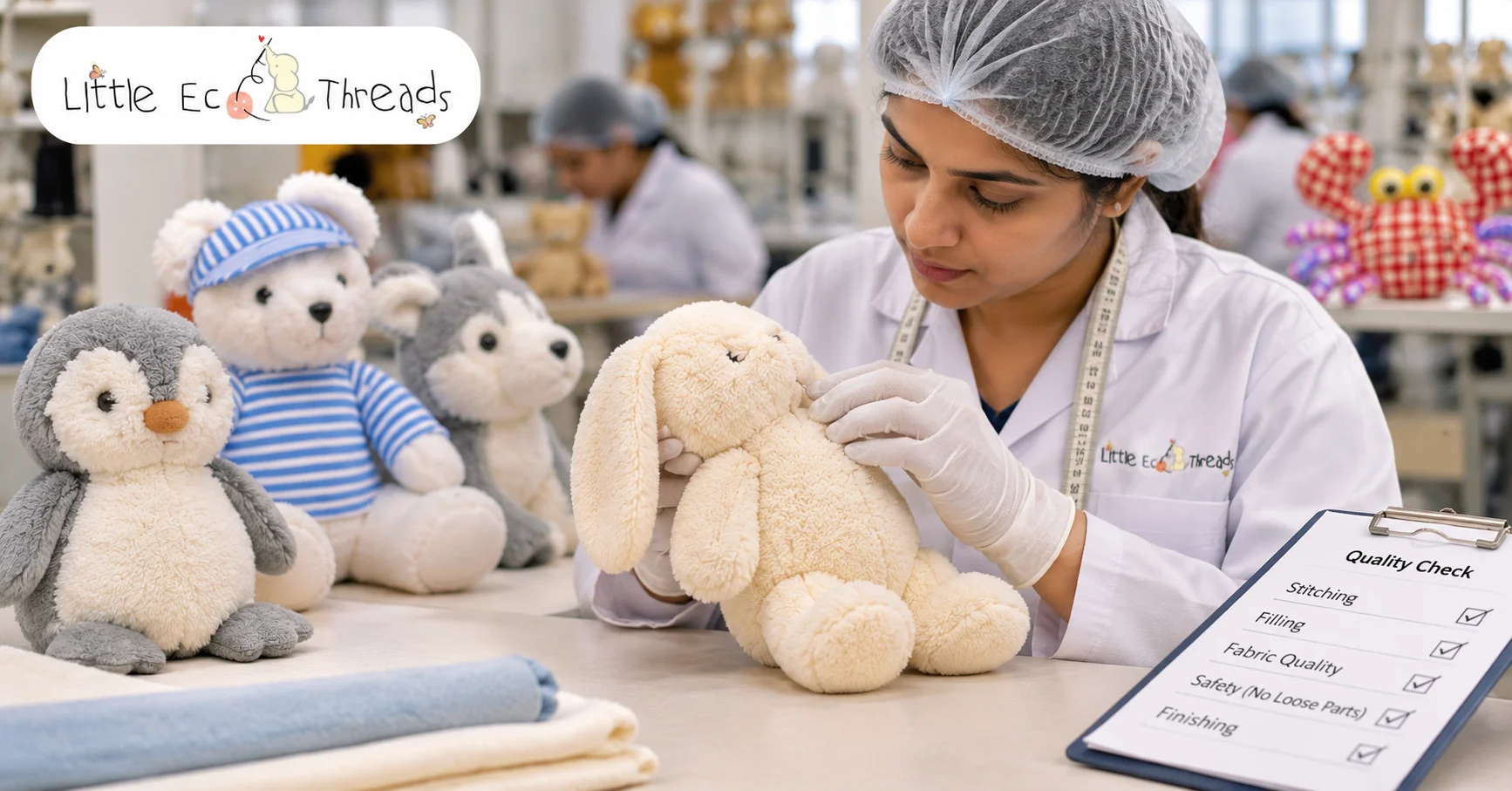
Toy compliance, however, is assessed on the finished product. In Europe, toys currently fall under the Toy Safety Directive 2009/48/EC, supported by EN 71 standards covering mechanical and physical properties (Part 1), flammability (Part 2) and migration of certain elements (Part 3) (Intertek). The new Toy Safety Regulation (EU) 2025/2509 entered into force on 1 January 2026 but applies from 1 August 2030, and products may be placed on the market under the existing directive until then (UL Solutions). EN 71-1 was also revised in 2026 (BRC), so buyers should confirm with their test laboratory which edition applies.
In the US, ASTM F963 is a mandatory toy standard under 16 CFR part 1250. Toys intended for children 12 and under must be tested by a CPSC-accepted laboratory and certified in a Children's Product Certificate (CPSC). Buyers in the UK, Australia and South Africa should check their own national requirements.
Compliance depends on the final product, the intended age group and the destination market. Textile certifications such as GOTS are voluntary and state that they do not replace legal requirements (GOTS), so they cannot establish toy safety compliance on their own.
How to Choose the Right Cotton Baby Toy Manufacturer in India
Start with manufacturing experience: ask for examples of comparable soft toy or baby product programmes and how long the factory has produced for export markets. Sampling and product development come next. A supplier that turns a brief into a pre-production sample, with clear feedback rounds, saves weeks later. Ask for transparency on material sourcing and for the quality assurance procedures used at cutting, stitching and final inspection.
Then test practical fit: customisation capabilities, minimum order quantities and production capacity against your forecast, plus export experience and communication. Request references from buyers in your market, and check any certificate a supplier cites for its scope, product categories and validity dates.
Conclusion
Sourcing cotton baby toys from India can give international brands, wholesalers and retailers access to an established textile manufacturing base, flexible product development and a range of wholesale, OEM, ODM and private label options. The right sourcing decision, however, depends on more than the quoted unit price. Buyers should assess fabric and filling traceability, construction quality, sampling procedures, production capacity and the safety requirements of each destination market before confirming an order.
A clear product brief is the best starting point. It should define the intended age group, materials, dimensions, design details, packaging, labelling, testing expectations and target order quantity. Agreeing these details early helps manufacturers prepare accurate samples and quotes, reduces avoidable revisions and creates a more consistent basis for repeat orders.
For brands seeking a manufacturing partner, Little Eco Threads offers B2B OEM and ODM services, private label opportunities and product capabilities across soft toys, newborn essentials and nursery textiles. With minimum order quantities starting from 50 pieces, the company can be considered by both emerging brands testing a collection and established businesses developing additional product lines. As with any supplier, buyers should confirm the materials, product specifications, testing plan and applicable compliance documentation for each individual toy before production.
Ultimately, successful cotton baby toy sourcing comes from building a transparent supplier relationship and treating quality and compliance as part of product development—not as final checks after manufacturing. With clear specifications and careful supplier evaluation, brands can develop distinctive cotton baby toy collections for their target markets.
Frequently Asked Questions
Why do international brands source cotton baby toys from India?
India has an established textile and garment manufacturing ecosystem, with capabilities that can support fabric sourcing, sampling, stitching, customisation and export-oriented production. Buyers should still assess each manufacturer's experience, quality systems and compliance capabilities.
Can cotton baby toys be manufactured under a private label?
Yes. Private label programmes allow a brand to sell toys made by a manufacturing partner under its own branding and packaging. The buyer and manufacturer should agree on designs, materials, labels, packaging, testing and order quantities before production.
What is the difference between OEM and ODM baby toy manufacturing?
In an OEM arrangement, the buyer generally provides the design and specifications for the factory to produce. In an ODM arrangement, the manufacturer contributes existing designs or product development support that the buyer can adapt.
What should buyers check before importing cotton baby toys?
Buyers should review material traceability, construction and seam quality, filling and trim details, labelling, packaging, sample approval and the toy safety requirements of the destination market. Compliance should be confirmed for the finished product and its intended age group.
Can smaller brands place low-MOQ cotton baby toy orders?
Some manufacturers offer lower minimum order quantities, although the available quantity depends on the design, materials, customisation and production requirements. Buyers should confirm the MOQ for each specific product and colourway.