Sustainable Winter Apparel for Kids: Sourcing, Private Labelling and Manufacturing Opportunities for Global Brands
The Changing Landscape of Sustainable Children's Winter Apparel
Winter is one of the most demanding categories in children's apparel. Outerwear and knitwear use more fabric, involve more components and carry longer development cycles than summer basics, so a sourcing error costs more and is harder to correct once the season is under way.
At the same time, retailers and wholesale buyers are asking suppliers for documented materials, audited factories and claims that can be verified. Flexible order quantities have also become a practical requirement, particularly for emerging labels that want to test a winter range before committing to depth.
This article looks at winter collections from a sourcing and manufacturing perspective. It covers sustainable fabrics for children's clothing, the product categories that make up a coordinated range, supplier selection, low-MOQ production and private-label development. The choice of a sustainable kidswear manufacturer shapes quality, compliance and delivery as much as the choice of fabric does.
Understanding Sustainable Winter Apparel for Kids
From a manufacturing standpoint, sustainable winter apparel is a set of connected decisions rather than a single material choice. A jacket made from certified fabric can still be a poor outcome if it loses shape after one season, is cut wastefully or cannot be traced back to its inputs. The factors that matter most in practice are:
- Material selection: fibre type, certification and suitability for the garment's warmth and wash requirements.
- Responsible textile processing: dyeing, finishing and chemical management, which affect environmental performance as much as the fibre does.
- Product durability: reinforced seams, secure closures and fabrics that tolerate repeated washing extend a garment's useful life.
- Garment construction: lining, quilting and trim choices determine warmth, comfort and safety.
- Manufacturing efficiency and waste reduction: careful pattern making reduces offcuts, and accurate sampling reduces rejected bulk goods.
- Supply chain transparency: documented sources, audits and certificates allow a brand to support its claims.
This is why sustainability involves more than choosing an organic fabric. Organic cotton describes how a fibre was grown; it says little about the dye house, the padding or the factory that assembled the garment. Little Eco Threads makes a similar point in its guide to sustainable fabrics for children's clothing, which recommends selecting fabric by garment, age group, climate and care requirements rather than by label alone.
Sustainable Fabrics for Children's Clothing in Winter Collections
Winter garments combine several fabric functions, and no single material covers all of them. It helps to separate four roles:
- Warmth: keeping heat in.
- Insulation: relying on air trapped in pile, quilting or fill.
- Comfort: the feel of the fabric against the skin.
- Layering: thin, stretchy pieces that sit beneath other garments.
Matching each material to a role avoids the common mistake of assuming every sustainable fabric suits every winter garment.
Organic cotton
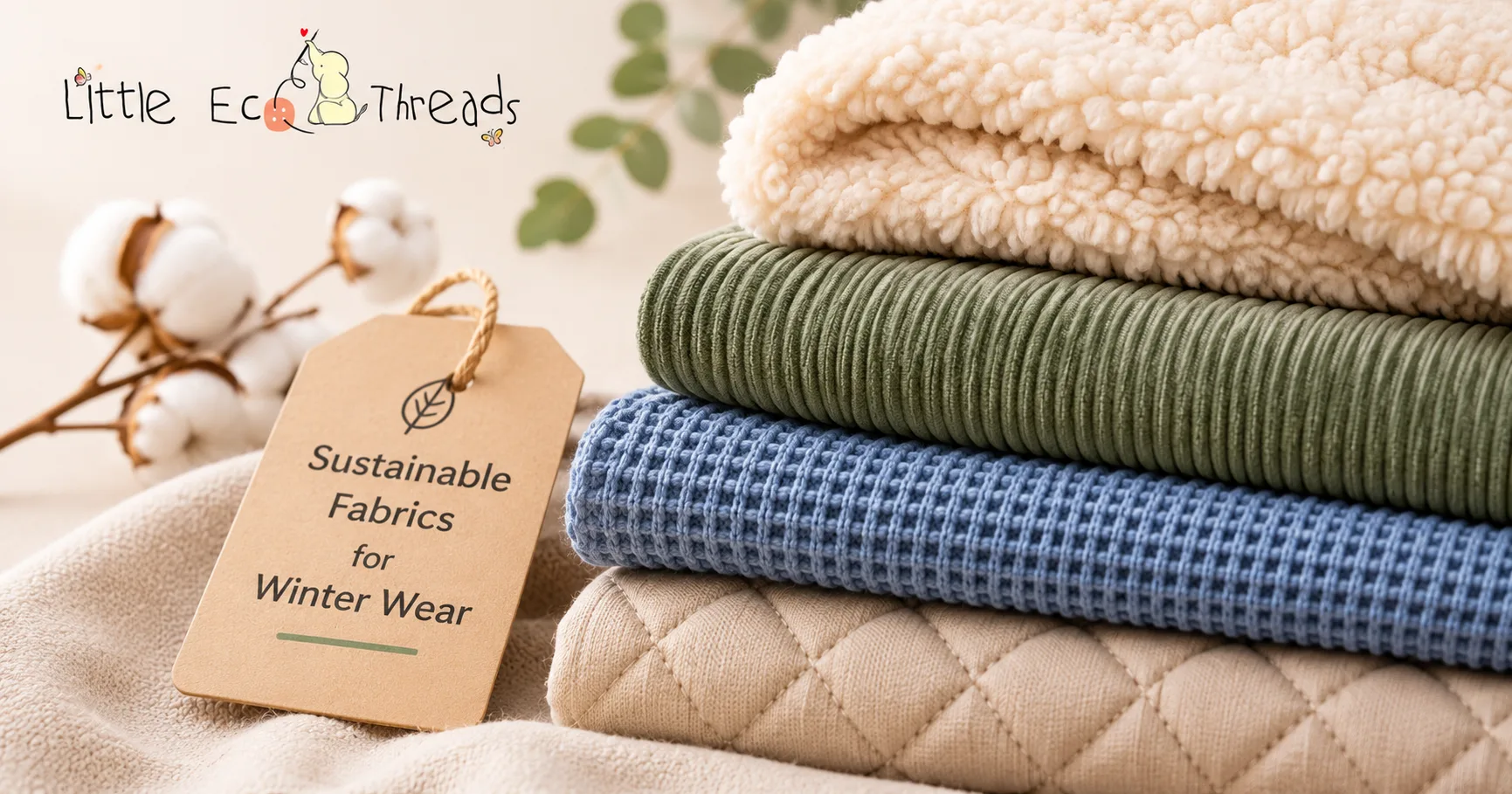
Organic cotton is the default choice for comfort and layering: soft, breathable and familiar to retail buyers. In winter ranges it appears in sweatshirts, knit sets, corduroy and quilted shells. It is not an insulator on its own and holds moisture, so it suits indoor and mild-weather layers better than cold-weather outer shells. The key sourcing question is certification scope, meaning what exactly is certified organic and whether GOTS covers the finished product.
Recycled polyester
Recycled polyester is widely used for fleece, sherpa-style pile and padding because synthetic fibres hold loft and dry quickly. It delivers warmth at low weight, which suits jackets and vests. Limitations include lower breathability against the skin and microfibre shedding. Brands making recycled claims should request GRS documentation; certifier SCS Global Services notes that a product needs at least 50% certified recycled content to carry a GRS label.
Recycled cotton
Recycled cotton comes from cutting waste or used garments. Shorter recycled fibres weaken yarn, so it is usually blended with other fibres. It suits casual knits and fleece-back fabrics where a textured, marl appearance is acceptable. Colour and strength can vary between lots, so test before bulk production.
Wool and responsibly sourced wool blends
Wool and merino blends offer natural insulation and temperature regulation, which suits knitwear and thermal base layers. The trade-offs are care requirements, skin sensitivity for some wearers and higher cost. Wool claims are best supported by the Responsible Wool Standard, which addresses animal welfare and farm-level practice and tracks certified wool through the supply chain.
Sustainable knitted fabrics
Waffle, cable and ribbed knits create texture and trapped air without heavy padding. They work well as mid-layers in sweatshirts, joggers and pinafores. Performance depends on yarn, gauge and finishing as much as on fibre, and shrinkage and pilling should be controlled through testing.
Other textile alternatives
Corduroy and denim are durable cotton fabrics suited to outer layers, and durability supports longer garment life. Muslin and linen appear in winter dresses and rompers, but they add layered style rather than insulation.
Winter fabric roles and sourcing checks
| Material | Main winter role | Typical garments | Key limitation | Sourcing check |
|---|---|---|---|---|
| Organic cotton | Comfort, layering | Sweatshirts, knit sets, corduroy | Little insulation; holds moisture | Certification scope |
| Recycled polyester | Warmth, insulation | Fleece, sherpa-style pile, padding | Lower breathability; microfibres | GRS documentation |
| Recycled cotton | Casual layering | Marl knits, fleece-back fabrics | Variable fibre strength | Blend ratio, lot testing |
| Wool and merino blends | Warmth, thermal layering | Knitwear, base layers | Care needs; skin sensitivity | Wool standard evidence |
| Cotton corduroy and denim | Durable outer layers | Jackets, coats | Weight; shrinkage | Wash and seam testing |
Popular Winter Apparel Categories for Kidswear Brands
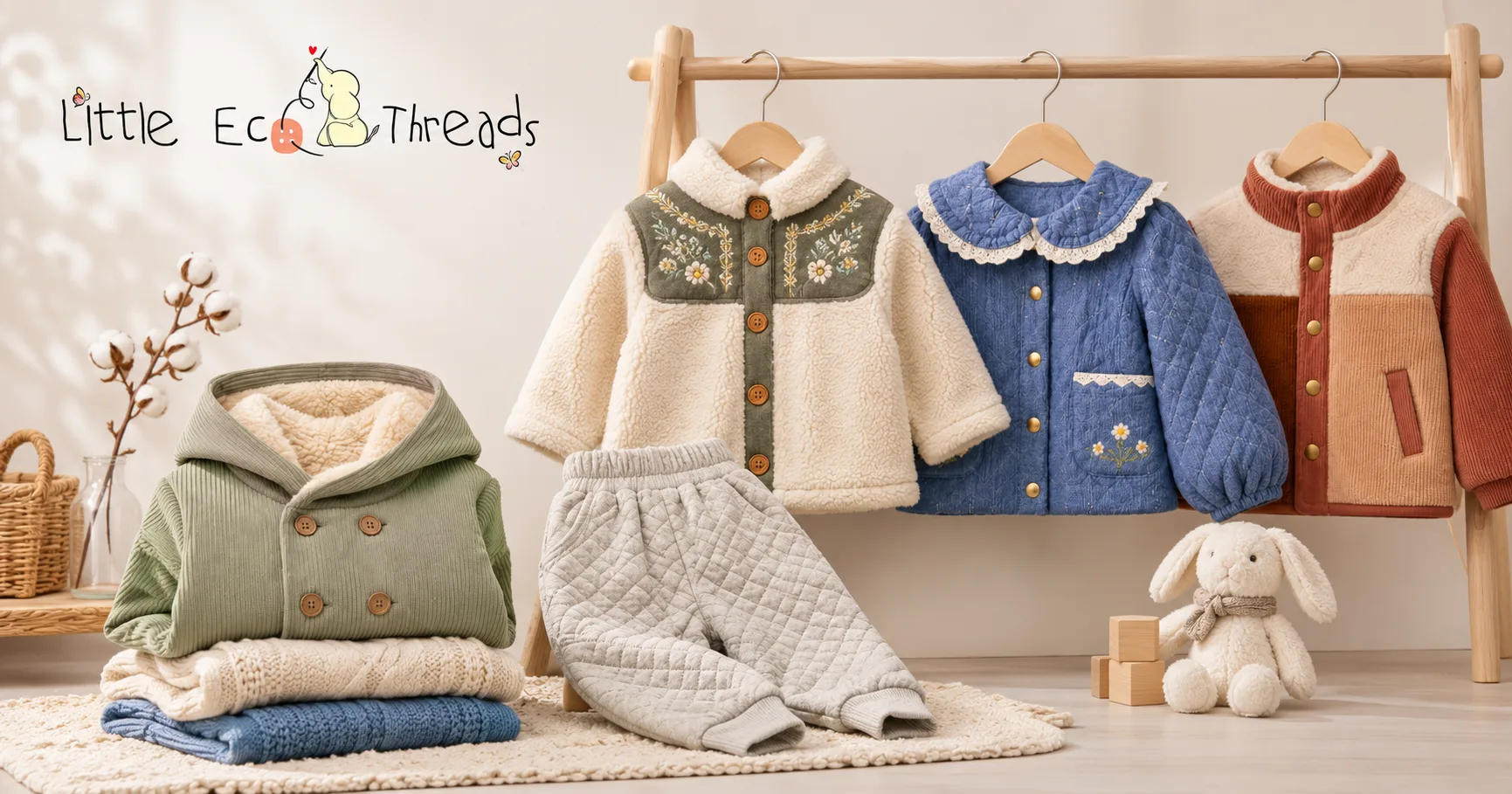
Buyers increasingly plan winter as a coordinated assortment: outer layer, mid-layer, base layer and bottoms that work together across a shared colour palette. This lifts units per customer and simplifies production because fabrics and trims are shared across styles. The Little Eco Threads winter collection shows how this looks in practice, with 32 designs on display:
- Sherpa and fleece jackets: a cream sherpa jacket with contrast pockets, a rust sherpa button jacket and a colourblock sherpa vest. Fleece-lined coats and gilets are also listed as manufacturing services.
- Quilted jackets and vests: a coral diamond-quilted vest, a cream quilted peter pan collar jacket and a gingham floral quilted jacket.
- Padded and puffer jackets: listed as a manufacturing service rather than among the displayed designs, so brands should request development samples.
- Corduroy outerwear: a green corduroy jacket with sherpa collar and a sage hooded corduroy coat.
- Knitwear and sweaters: a cable-knit pinafore dress and matching cable-knit joggers, plus wrap cardigan sets and sweatshirts in the knits collection.
- Sweatshirts and joggers: a waffle-knit sweatshirt and joggers, and quilted baby joggers.
- Layering pieces and base layers: ribbed bodysuits and leggings in the knits collection, with base layers and thermals listed as a winter service.
- Winter dresses and coordinated separates: muslin dresses and smocked rompers designed to layer over long-sleeve tops.
The cable-knit pinafore dress and joggers, or the waffle-knit sweatshirt and joggers, show how a small number of fabrics can produce matching sets. A brand might build one outerwear story, one knit story and one layering story rather than twenty unrelated styles.
What Global Brands Should Consider When Sourcing Winter Apparel
Supplier selection for winter is mostly about reducing risk before bulk production begins. International brands can also explore B2B sourcing resources such as B2B Listings when researching business directories and potential manufacturing connections. These are the factors sourcing managers should work through:
- Fabric availability and consistency: confirm fabric lead times, shade consistency between lots and whether the fabric can be reordered. Sherpa, quilting and knit fabrics are often developed to order, so fabric lead time can exceed garment production time.
- Product development and sampling: agree a tech pack, fit sample and pre-production sample. Ask how many revision rounds are included and who bears extra sampling costs.
- Customisation requirements: trims, hardware, prints and embroidery each add sourcing steps and can affect minimums and timelines.
- Minimum order quantities: confirm whether the MOQ applies per style, colour or fabric, and how customisation changes it.
- Production timelines: the Little Eco Threads website cites production lead times of 45 to 90 days. Actual schedules depend on fabric, approvals and order size, so get dates in writing.
- Quality control: ask about inline and final inspection, the AQL level applied and available test reports. The company's about page refers to a 1.5 AQL standard in finishing and packing.
- Safety and destination-market compliance: winter garments raise specific issues, including drawstrings, hoods, closures and padding.
- Packaging and labelling: care labels, fibre content, origin marking and hang tags differ by market and should be set before production.
- Shipping and delivery: sea and air freight are both options. Work backwards from the in-store date through freight, final inspection, bulk production, fabric delivery and sample approval, and add contingency at each stage.
Safety compliance for children's outerwear
Compliance deserves particular attention in outerwear. In the United States, the CPSC treats hood and neck drawstrings on children's upper outerwear in sizes 2T to 12 as a substantial product hazard, and restricts certain waist and bottom drawstrings up to size 16. In Europe, EN 14682 sets requirements for cords and drawstrings on children's clothing up to age 14.
Brands should confirm testing and documentation requirements for each destination before locking designs. The winter page lists covered zip pulls, flame-resistant lining options and secure closures.
Low-MOQ Manufacturing and Opportunities for Emerging Brands
Winter ranges are expensive to hold and dependent on the weather. A warm autumn can leave heavy outerwear unsold, which makes low-MOQ manufacturing especially valuable in this category. Smaller runs let brands:
- Test new winter collections before committing to depth.
- Introduce new styles and colourways in smaller quantities.
- Reduce inventory exposure at the end of the season.
- Experiment with sustainable fabrics, such as recycled or wool-blend options.
- Expand product offerings gradually, using sell-through data to guide repeat orders.
- Manage seasonal purchasing decisions with less capital tied up.
MOQs are not universal. They vary with fabric sourcing, garment construction, trims, printing, customisation and production planning, and no brand should assume every manufacturer offers the same terms.
For Little Eco Threads, each of the 32 designs currently displayed in the winter catalogue lists an MOQ of 100 pieces, and the page describes MOQ-friendly production runs for boutique winter ranges. Actual minimums should be confirmed for the specific product, fabric and level of customisation. A brand testing the market might spread 100-piece runs across several designs rather than placing a single large order.
Private Label and Custom Winter Clothing Manufacturing
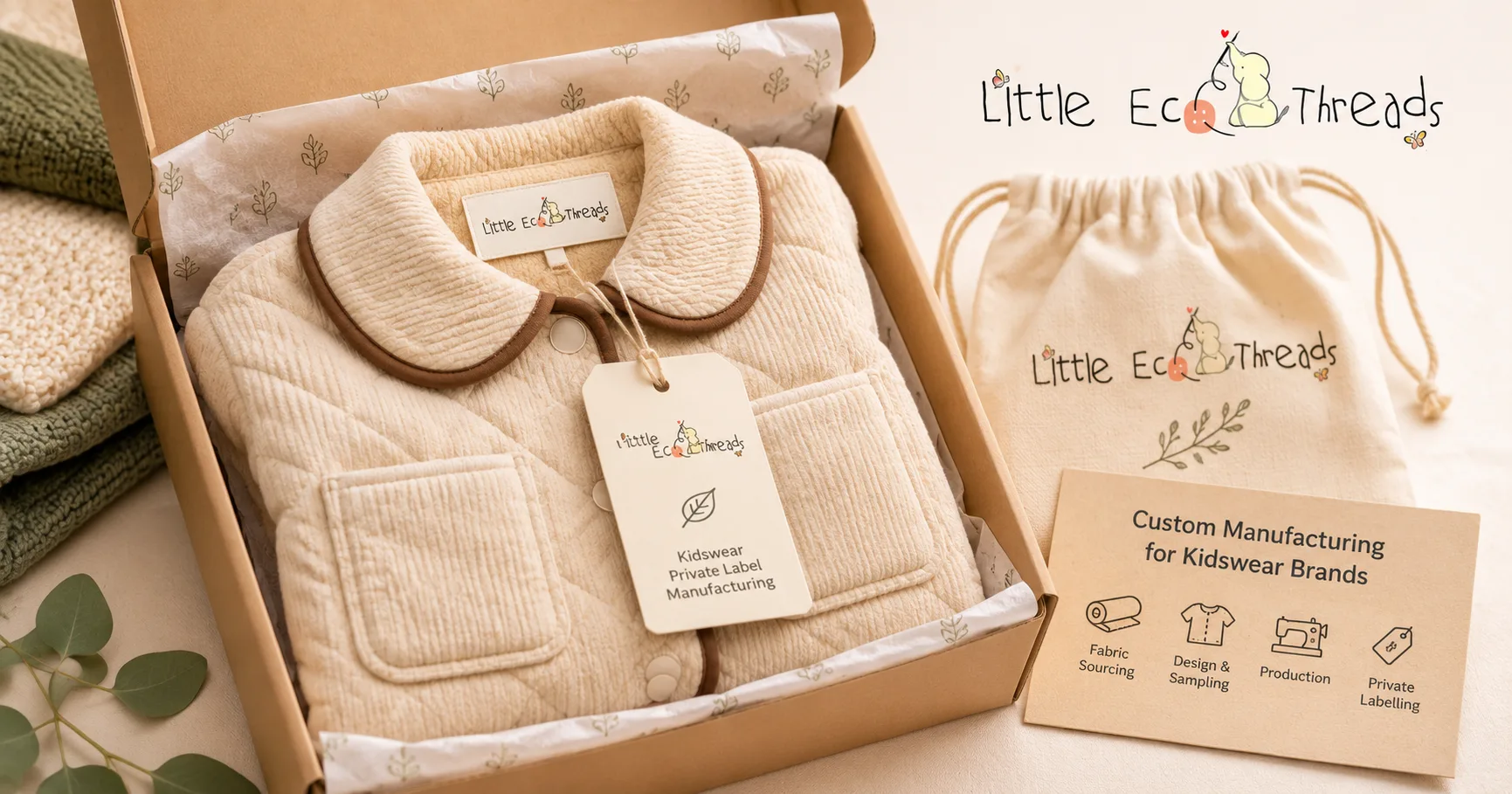
Private-label manufacturing lets a brand sell garments under its own name, made to its specifications by a third-party factory. It lets international brands control design, fit, materials and presentation without owning production facilities. Little Eco Threads' custom manufacturing page lists the services typically involved:
- Private labelling, custom labels and hang tags.
- Fabric sourcing and development, including fabric testing and certification support.
- Custom colours, with Pantone colour matching, and all-over or screen printing.
- Hand and machine embroidery, smocking, appliqué and patchwork.
- Custom trims, buttons and zippers.
- Pattern making, grading and size range customisation; the winter page lists sizes from 0–3M to size 13.
- Custom packaging solutions.
OEM and ODM routes
In industry terms, OEM manufacturing means producing to a brand's own designs, while ODM means adapting a manufacturer's existing designs. The company's website describes both routes in practice: brands can submit their own designs or tech packs, and the catalogue states that its illustrative products can be modified in design, material or style. Brands should confirm which arrangement applies to their project.
From concept to finished collection
The company outlines a four-step path from concept to finished collection:
- Design and development
- Sampling
- Production
- Delivery
Samples are reviewed before bulk production starts, and finished garments are inspected and packed with custom labelling before shipping. Free fabric swatches are also available.
Why Manufacturing Partnerships Matter for Sustainable Winter Collections
A reliable partner affects far more than unit price. It determines whether a winter collection arrives consistent, on time and with documentation a retailer will accept. The areas that matter most are:
- Consistent product quality across sizes, colours and repeat orders.
- Material sourcing, including access to certified or tested fabrics.
- Production planning that accounts for fabric lead times and approvals.
- Responsible manufacturing, verified through audits rather than assertions.
- Sampling and approvals that are clearly documented.
- Quality assurance at inline and final stages.
- Long-term relationships that improve development speed season after season.
Little Eco Threads as a manufacturing partner
Little Eco Threads is a baby and children's clothing manufacturer based in Noida, India, and the kidswear division of Home Fashions, a garment manufacturer with more than 30 years of experience. Its about page states that it has served more than 100 brands across Europe, North America, Australia and other markets, with more than 25 years of experience.
For winter programmes, its collection of sherpa, quilted, corduroy and knit styles and its listed services in padded jackets, fleece-lined coats, gilets, knitwear and base layers may be relevant to buyers building a coordinated range. The custom manufacturing service covers development through delivery.
Its sustainability page lists three approvals:
- GOTS is a processing standard for textiles made from organic fibres.
- GRS verifies recycled content and responsible practices.
- Sedex is an ethical trade membership organisation, and its SMETA audits assess labour, health and safety, environmental and ethics criteria; it is not a product certification.
Certification scope still needs checking. Not every product or material carries every certification, and not every winter style is made from organic or recycled fibres. Buyers should request current certificates and the scope that applies to their materials and order; the website states documentation is available on request. The GOTS certification guide on the Little Eco Threads blog explains this in more detail.
Building Sustainable Winter Collections Through the Right Sourcing Strategy
Sustainable winter collections depend on matching fabrics to garment roles, planning sourcing before design is locked, and using flexible production to manage seasonal risk. A sustainable children's clothing manufacturer should be able to show what its certifications cover, explain how minimums work and support development from sample to shipment.
Brands planning a winter range can explore the winter collection and discuss fabrics, customisation, minimums and timelines with Little Eco Threads through its contact page.
Frequently Asked Questions
What fabrics are best for sustainable children's winter clothing?
It depends on the garment. Organic cotton suits comfort layers and sweatshirts, recycled polyester suits fleece and padding, wool and merino blends suit knitwear and thermals, and corduroy suits durable outer layers. No single fabric suits every winter garment.
What is a typical MOQ for kids' winter clothing?
MOQs vary by manufacturer, fabric, trims and customisation. Little Eco Threads' winter catalogue lists 100 pieces for each displayed design, and the actual MOQ should be confirmed for each product and customisation level.
Can I add my own label and packaging to winter garments?
Yes, private labelling is a standard service. Little Eco Threads lists custom labels, hang tags and custom packaging among its customisation services.
What certifications should I ask a kidswear manufacturer about?
GOTS covers organic textile processing, GRS covers recycled content, and Sedex membership with SMETA audits covers ethical supply chain practice. Ask for current certificates and confirm they cover your specific materials and order.
What safety rules apply to children's winter jackets?
Rules depend on the destination market. In the US, the CPSC restricts hood and neck drawstrings on children's upper outerwear in sizes 2T to 12, and in Europe EN 14682 covers cords and drawstrings on children's clothing up to age 14. Confirm requirements before finalising designs.
How do I move from a design concept to a finished winter collection?
Typically through design development with a tech pack, sampling and approval, bulk production with quality control, then packing and shipping. Little Eco Threads describes a four-step process covering these stages.
How long does winter apparel production take?
Little Eco Threads' website cites production lead times of 45 to 90 days. Actual timing depends on fabric availability, sample approvals and order size, so confirm dates in writing.